
Public space
The design and quality of life of the public space determines the cityscape to a large extent. The interplay between architecture and nature plays an important role in this. Harmonious cohesion gives towns and cities their own identity. From an intimate park to a vibrant town square or green carpark.
Public spaces have a therapeutic and harmonious character. They are intended to bring calm to our busy, hectic world full of noise and movement. Human need is central to public outdoor spaces. They are spaces for the community and must therefore be accessible to the public at large. It is an art to utilise public spaces flexibly and set them up optimally.


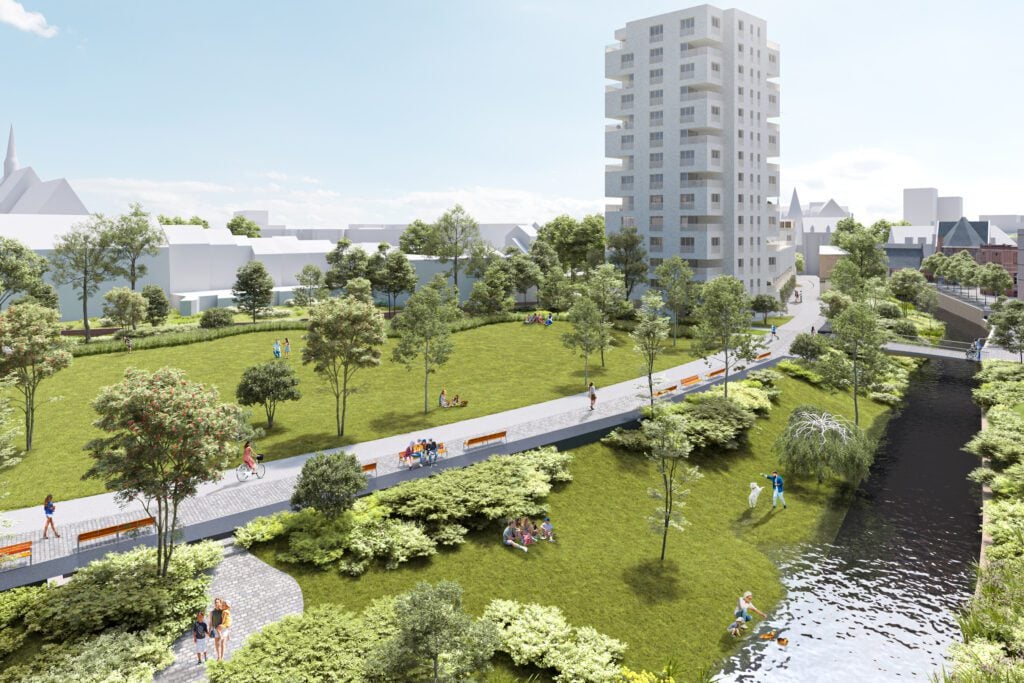
Generous proportions & voluminous movements
Rest areas and activity areas, communal gardens, playgrounds and meeting places create natural spaces for every age group to enjoy. We employ generous proportions and voluminous movements with repetitions of large clusters of plants, shrubs and trees. That way, we avoid ‘fragmentation’, without sacrificing a feeling of security.
The planting of trees in public spaces is therefore an important spearhead of our projects. We use trees to create natural shade in parks and squares. In addition, we arouse the curiosity of visitors by planting collections of trees.
Future-oriented design
Designing public spaces demands the right balance between numerous aspects.
- liveability
- functionality
- feasibility
- future maintenance
When a project has evolved beautifully and reached maturity, that is the very best compliment for us as landscape architects. As it happens, the level of maintenance greatly influences the appreciation of the public space. Want to find out about the options for making your public space functional, maintenance-friendly and green?
Frequently asked questions
Which public spaces does Wirtz design?
Wirtz designs squares, parks, campuses and the open space of urban renewal projects, from a single street to a quarter of several hectares. The brief decides the scale: a pocket park and a city park ask the same attention to levels, structure and the way people will cross the ground.
What makes a public park different from a private garden?
A public park is used by everyone, in every season and at every hour, so Wirtz designs for wear. Paths follow the lines people will actually walk, planting is chosen for robustness as much as for looks, and sightlines are kept open so the space feels safe after dark.
How does a Wirtz public space hold up over time?
Wirtz works with a limited family of durable materials and a planting structure that gains rather than loses with age. Clipped hedges and trees are pruned towards their intended form over several seasons, and the maintenance a design will realistically receive is weighed while it is being drawn.
Who does Wirtz work with on public projects?
Wirtz International works alongside the city or the developer, the architect and the engineers from the competition stage onward. That early involvement is what lets the landscape set the structure of a quarter instead of filling in what is left between the buildings.


